There is a thing that happens to the body in a moment of real danger that no one who hasn’t been through it quite believes. Time stretches. Sound goes strange — some of it roaring, some of it gone. Your vision narrows to a tunnel, and your hands seem to move on their own, faster than thought, while a part of you watches from somewhere just outside yourself with an eerie calm. I have been in a few of those moments in my life, and I can tell you they do not feel slow, and they do not feel holy in the gentle sense of that word. They feel fast, and loud, and electric. When I wrote the action in The Hunter of Wolves, that is the sensation I was chasing on the page.
Real action does not feel slow and holy. It feels fast and loud, and time bends. I wrote it the way I lived it.
Somewhere along the way, a lot of readers picked up the idea that a book with faith in it must move like a sermon — earnest, careful, and a little sleepy. I understand where the impression comes from. But I set out to write something different, and the existence of faith-based stories that genuinely feel like action movies is proof the impression is wrong.
Key Takeaways
- Faith-based fiction does not have to be slow; The Hunter of Wolves is built for momentum, with genuine set pieces and cinematic propulsion.
- The common failure of “message fiction” is letting the sermon smother the action — a trap this book is engineered to avoid.
- Real action, written from real experience, is fast, sensory, and time-distorting; the prose aims to reproduce that physical sensation.
- The book is staged cinematically — ambushes, an undercover infiltration, a gate confrontation, a dawn raid, a tunnel escape.
- Momentum engines like a ticking clock and escalating stakes keep the pages turning.
- Faith functions as horsepower in this kind of story, raising the stakes, rather than as brakes that slow it down.
The Myth That Faith Fiction Has to Be Slow
Let me name the problem directly, because it is a craft problem before it is anything else. When a story stops cold so a character can deliver the lesson out loud, the tension leaks out of the room. The reader feels the gears shift from story to instruction, and no amount of sincerity buys that momentum back. This is the failure mode that gave faith-based fiction its reputation for being slow, and it is entirely avoidable.
The danger is never that the action will overwhelm the message. It is that the message will smother the action.
I built The Hunter of Wolves on the conviction that meaning does not have to arrive by lecture. It can arrive at a dead sprint. The deepest things in the book are delivered inside the action, not in pauses from it — a man’s faith tested in the half-second before he moves, a truth understood in the middle of a gunfight rather than in a quiet aside afterward. If the reader has to choose between being gripped and being moved, I have done it wrong. The whole craft is in making those the same moment.
What an Action Movie Actually Does
Think about what a great action film does to you. It opens a question your body needs answered — will he make it, will she get there in time — and then it refuses to let you look away until you find out. It uses set pieces, each one raising the stakes past the last. It keeps a clock running. It alternates the white-knuckle sequences with just enough quiet to let you breathe before the next surge. None of that machinery is hostile to a serious story. It is simply how you keep a reader, or a viewer, leaning forward.
I leaned on every one of those tools. The Hunter of Wolves is structured in waves — pursuit, danger, a brief regrouping, then a larger danger — so that the book accelerates rather than plateaus. The early chapters do the patient, grounded work of an investigation, yes. But that patience is a coiled spring. It exists so that when the action breaks, it breaks hard.
Writing the Body, Not the Sermon
The single most important decision in the action scenes was to write the body and not the doctrine. When the violence comes, I stay in the senses — the spent cartridge that hasn’t yet hit the ground, the gun barely clear of the waistband, the report and the recoil, the way the world slows and the hands move before the mind catches up. I learned that rhythm not from other novels but from life, and I trusted it to carry the meaning without my having to stop and explain it.
When the missionary in the book is surrounded at a stronghold gate and finally moves, he moves “at a speed different from his enemies,” firing in four directions before the first shell has fallen, and the reader is not told in that instant what it means about faith or providence. The reader simply feels it — the impossible calm, the sense of being carried by something. The meaning is in the velocity, not in a footnote attached to it. That is how I kept the faith from ever becoming a speed bump. I let the action itself preach, silently, with its own muscle.
The Set Pieces
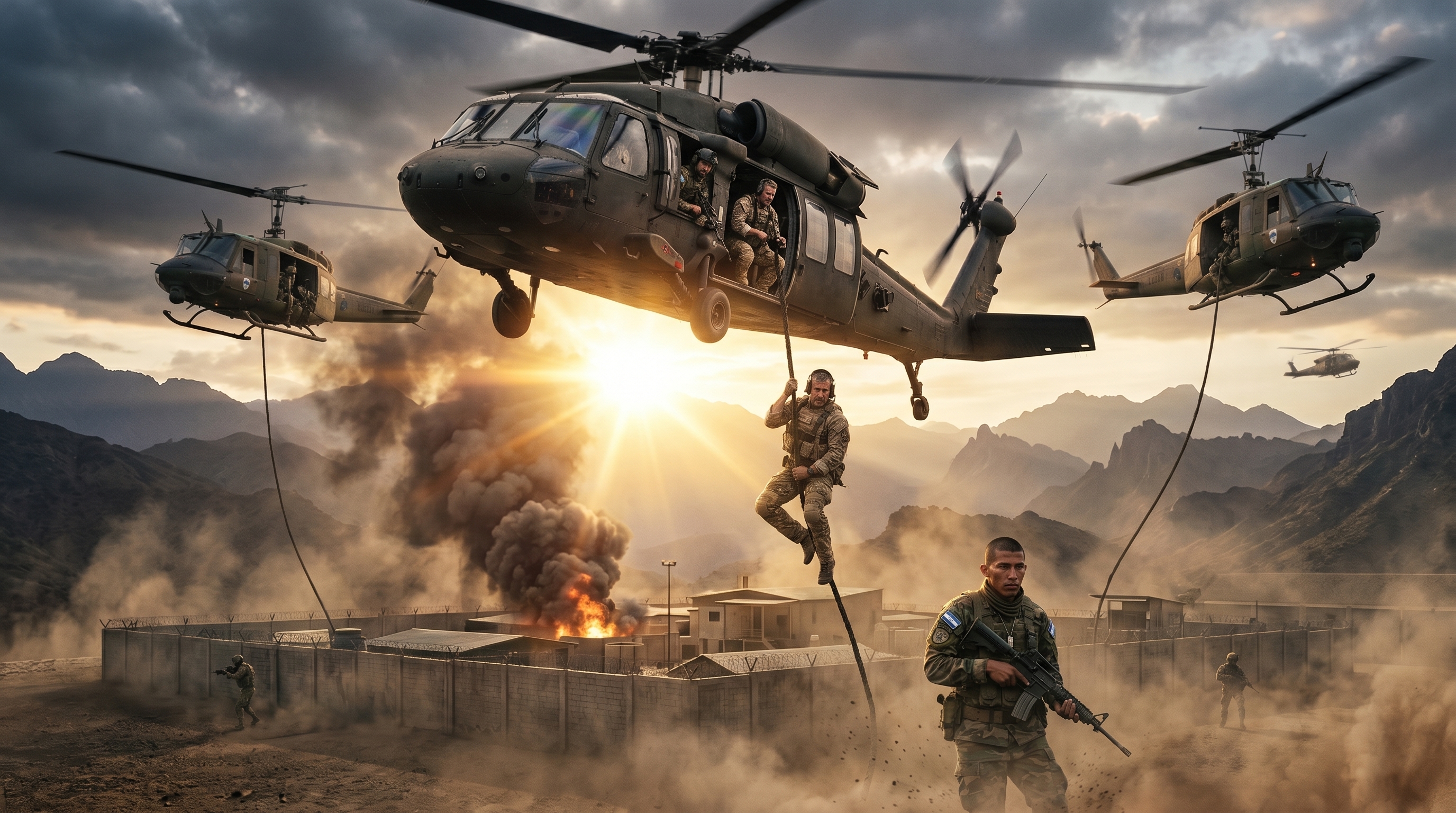
A book that wants to feel like an action movie has to deliver actual set pieces, and I made sure this one does. There is the ambush in the opening, where a predator is poised to spring and the rescue arrives in the same breath. There is a detective racing toward a drive-by call with lights and siren, hurling himself toward chaos. There is an undercover infiltration in the alley behind a restaurant, a man in disguise inches from men who would kill him if they knew. There is the confrontation at the gate. And then there is the climax I am proudest of, cinematically: a dawn raid, gunships banking over a mountain stronghold, warriors fast-roping down as the sun cuts blinding into the dark, followed by an escape through secret tunnels and a rescue on the wings of a helicopter.
Somewhere we got the idea that a book about faith has to move like a sermon. I wanted one that moves like a chase.
I staged all of it the way I would stage it for a camera — clear geography, escalating danger, a rhythm of tension and release. When the horns blow in the distance and the cavalry comes over the ridge, I want the reader’s pulse to do exactly what it would do in a darkened theater.
The Ticking Clock and the Stakes
Momentum needs more than explosions, though. It needs a reason to hurry. Underneath the set pieces, the book runs on the oldest engine in the action genre: a clock and a stake you cannot bear to lose. There is a trapped woman and a small child who needs his mother. There is a window of opportunity that is closing. The reader is never allowed to forget that delay has a cost measured in human lives.
That is what turns mere incident into suspense. A gunfight is exciting; a gunfight you need someone to survive because a child is waiting for them is unbearable in the best way. I kept the human stakes pressed against the reader at every turn, because momentum without stakes is just noise, and stakes are where a faith-driven story actually has an advantage.
Where Faith Adds Horsepower Instead of Brakes
Here is the part most worth saying. Done badly, faith slows an action story to a crawl. Done well, it does the opposite — it raises the ceiling on what the action can mean. When you believe that a soul hangs in the balance and not merely a life, the stakes are not lowered; they are raised to infinity. When you believe an unseen war is riding on the outcome, every set piece carries a second charge.
Faith should be the horsepower in this kind of story, not the brakes.
That is the secret of faith-based books that feel like action movies. The faith is not a tax the action has to pay. It is fuel. It gives the chase a reason that goes deeper than survival, and it lets the quiet moments between the set pieces hum with significance instead of going slack. The reader gets everything an action movie offers — speed, danger, the pounding heart — and then gets the one thing most action movies cannot give: the sense that all that velocity was carrying them somewhere that actually matters.
Final Thought
I never accepted the premise that a story about the things I care most about had to be a slow one. The realest, most heart-pounding moments of my life were also the ones where the deepest things were at stake — and I see no reason fiction should sever what life keeps joined. The Hunter of Wolves is my argument, made in set pieces and gunfire and a helicopter at dawn, that a faith-based book can grab you by the collar and not let go. If it works, you will turn the pages too fast to notice you are being moved as much as you are being thrilled. That, to me, is the whole point: to make the racing heart and the stirred soul the very same beat.
Discussion Questions
- The author argues that meaning can arrive “at a dead sprint” rather than in reflective pauses. Can you think of stories that moved you most in the middle of their fastest moments?
- Many readers assume faith-based fiction must be slow. Where do you think that assumption comes from, and is it fair?
- The book tries to “write the body, not the sermon” in its action. Why might showing a character’s faith through what they do under pressure be more powerful than having them explain it?
- The story raises the stakes from survival to the fate of a soul. Does that kind of stake make action more gripping for you, or does it change the experience in some other way?
- The author claims faith can be “horsepower, not brakes” in a thriller. Do you agree that conviction can intensify action rather than slow it?
Frequently Asked Questions
Is The Hunter of Wolves actually action-packed, or just marketed that way? It genuinely delivers action — ambushes, gunfights, an undercover infiltration, a dawn raid on a fortified compound, and a tunnel escape. The early chapters build patiently, then the book accelerates into sustained, cinematic set pieces.
Does the faith content slow down the pace? It’s specifically built not to. The meaning is delivered inside the action rather than in lecture-style pauses, so the spiritual weight intensifies the tension instead of interrupting it.
Is the violence graphic or cinematic? It’s kinetic and intense but restrained — written for momentum and sensation rather than gore. The book favors the pounding-heart feel of an action film over explicit, gratuitous detail.
Could the book work as a film? It was written with cinematic staging in mind — clear geography, escalating set pieces, and a rhythm of tension and release. Many readers describe it as highly visual and easy to picture on screen.
What other faith-based books feel like action movies? There’s a whole category of faith-driven thrillers built for momentum. I explore specific recommendations alongside this one in a separate article on thrillers that combine crime, faith, and the supernatural.
Sources
- sensation — https://dictionary.apa.org/sensation
- sermon — https://www.merriam-webster.com/dictionary/sermon
- tension — https://www.merriam-webster.com/dictionary/tension
- momentum — https://www.merriam-webster.com/dictionary/momentum
- conviction — https://dictionary.apa.org/conviction
- doctrine — https://www.merriam-webster.com/dictionary/doctrine
- providence — https://www.britannica.com/topic/providence-theology
- stake — https://www.merriam-webster.com/dictionary/stakes
- suspense — https://www.merriam-webster.com/dictionary/suspense